
Shipping heavy machinery from China to Miami requires a route that balances transit time, freight reliability, customs efficiency, and supply-chain predictability. The 40HQ FCL best route for machinery from China to Miami depends on port selection, carrier schedules, seasonal logistics trends, and specific equipment requirements. Since machinery shipments often involve oversized parts, sensitive components, and strict delivery timelines, choosing the optimal path becomes essential for avoiding delays and unnecessary costs.

What Is the Most Reliable 40HQ FCL Route from China to Miami?
Selecting the best route begins with identifying the most efficient departure ports. Although several Chinese ports offer strong export capabilities, some consistently outperform others for machinery due to stable sailing schedules, lower congestion, and broader carrier choices.
Main Port Options from China
| Origin Port | Strengths | Typical Transit Time | Notes |
|---|---|---|---|
| Shanghai | Most stable schedules | 28–33 days | Best for heavy machinery |
| Ningbo | Lower freight rates | 30–35 days | Strong carrier availability |
| Shenzhen (Yantian) | Fast loading & customs | 32–36 days | Ideal for urgent shipments |
| Qingdao | Good for northern suppliers | 33–38 days | Strategic for factory clusters |
Although transit times vary, Shanghai → Miami is widely considered the most reliable base route thanks to predictable carrier rotations and better space availability for 40HQ containers.
How Do Sailing Schedules Influence the Best Route to Miami?
Carriers frequently adjust schedules due to weather, port congestion, and global logistics trends. Consequently, updated transit time planning is crucial.
Typical Route Corridor
China Port → Pacific Ocean → Panama Canal → Gulf of Mexico → Port of Miami
However, delays at the Panama Canal—especially during dry seasons—can affect timelines. Therefore, freight forwarders often evaluate schedule consistency from each shipping line. Additionally, carriers like COSCO, Evergreen, and CMA CGM usually maintain stronger reliability for long-haul machinery shipments.
Why Does Machinery Type Affect the Best Route?
Machinery shipments differ significantly depending on weight, dimensions, and sensitivity. Heavy-duty construction machines, generators, compressors, and manufacturing components may require stronger loading procedures and specific container orientation.
Key Factors Influencing Route Choice
- Gross weight of the machinery
- Center of gravity and securing needs
- Packaging type (steel frame, wooden case, palletized)
- Humidity or shock sensitivity
- Value and insurance requirements
Furthermore, oversized machinery might require special clearance procedures at the Panama Canal, even when shipped in a 40HQ. Therefore, choosing a carrier with experience in machinery freight minimizes risks during transit.
What Documentation Is Needed for Machinery Shipping to Miami?
To ensure smooth customs clearance and avoid late delivery, accurate documentation is essential. Moreover, Miami customs enforcement is strict for industrial items, making compliance a priority.
Machinery Customs Documentation Checklist
| Document | Purpose | Required? |
|---|---|---|
| Commercial Invoice | Declares value and description | Yes |
| Packing List | Shows dimensions & weight | Yes |
| Bill of Lading | Confirms shipment | Yes |
| HS Codes | Identifies machinery category | Yes |
| Importer Security Filing (ISF) | Needed for US cargo | Yes |
| COO (Certificate of Origin) | Reduces tariff risks | Sometimes |
| Machine Testing Certificates | Ensures safety compliance | Case-based |
Additionally, accurate HS classifications prevent delays and unexpected import duties.
What Are Real 40HQ Machinery Shipping Case Studies?
Case Study 1: CNC Machine Set — Shanghai → Miami
Cargo Type: CNC machining center
Volume: 1 × 40HQ
Gross Weight: 21,500 kg
Packaging: Steel-reinforced wooden crates
Route: Shanghai → Panama Canal → Miami
Transit Time: 31 days
Freight Cost: USD 4,850 (all-in)
Notes: Chosen for stable departure, low congestion, and strong reefer-monitoring service for humidity-sensitive tools.
Case Study 2: Construction Machinery Parts — Ningbo → Miami
Cargo Type: Excavator components & hydraulic arms
Volume: 40HQ
Gross Weight: 19,200 kg
Route: Ningbo → Pacific → Panama Canal → Miami
Transit Time: 34 days
Freight Cost: USD 4,350
Notes: Customer required predictable delivery for a project timeline. Ningbo route offered more frequent weekly sailings.
How Do Transit Times Compare Across Different Shipping Options?
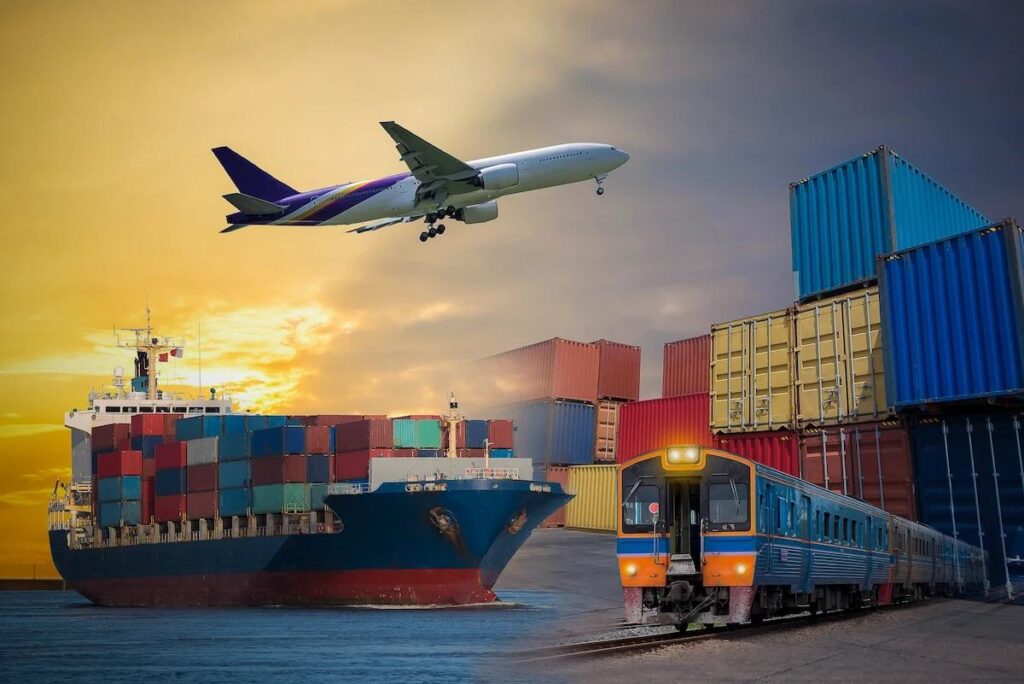
Machinery is generally shipped via FCL sea freight, yet other routes are sometimes evaluated.
Transport Mode Comparison
| Transport Mode | Average Cost | Transit Time | Pros | Cons |
|---|---|---|---|---|
| 40HQ FCL Sea Freight | Low | 28–38 days | Best for machinery | Slower than air |
| Air Freight | Very High | 3–7 days | Fastest delivery | Weight/size limits |
| Rail Freight | Medium | N/A for Miami | Stable | Not applicable for US |
| LCL Sea Freight | Medium | 35–45 days | Good for small cargo | Machinery seldom suitable |
Therefore, the 40HQ FCL route remains the most logical and cost-effective solution.
Need a reliable logistics partner? Share your shipment details and we’ll provide a tailored quotation quickly and accurately.
What Factors Determine the Best Route Beyond Transit Time?
Although transit time is important, other logistical elements influence route optimization.
Additional Route-Selection Factors
- Port congestion levels
- Carrier reliability
- Seasonal weather around Panama Canal
- Machinery sensitivity
- Supplier location in China
- Total shipping cost
- Delivery schedule at Miami job site
Moreover, choosing a departure port close to the factory significantly reduces inland trucking charges.
How Can Importers Reduce Delays When Shipping Machinery to Miami?
To minimize risk, importers can follow several best practices. For instance, early booking ensures better space availability, especially during peak seasons.
Recommended Strategies
- Book 2–3 weeks in advance
- Use humidity-resistant packaging
- Confirm ISF filing ahead of sailing
- Select carriers with consistent Miami service
- Avoid overloading heavy machinery in a single container
- Coordinate delivery with Miami port truckers early
Consequently, importers maintain smoother supply-chain flow and predictable delivery timelines.
Conclusion
Choosing the 40HQ FCL best route for machinery from China to Miami involves evaluating departure ports, sailing schedules, customs processes, carrier reliability, and machinery characteristics. Since heavy equipment requires careful handling and stable transit, selecting the optimal route ensures lower transportation costs, minimized delays, and a smoother logistics experience. Ultimately, a balanced approach that considers transit time, risk management, and supply-chain efficiency will guarantee successful machinery delivery to Miami.
Request a Quote
Need a tailored solution for your shipping from China?Let TJ China Freight Forwarder assist you with reliable, cost-effective service.
FAQ:
Q1.How early should I book a 40HQ FCL shipment from China to Miami?
Booking at least two weeks ahead ensures better rates and reliable carrier space for heavy machinery during peak freight seasons.
Q2.Do machinery shipments require special loading procedures?
Yes. Machinery often needs reinforced blocking, bracing, and moisture protection to guarantee safe 40HQ FCL transport across long ocean routes.
Q3.What affects customs clearance for machinery in Miami?
Accurate HS codes, clean documents, and proper machine testing certificates reduce delays and prevent unexpected inspections during entry.
Q4.Can the shipment route change due to Panama Canal conditions?
It may. Severe congestion or restrictions can shift carriers to alternative rotations, slightly increasing transit time for Miami-bound machinery.
Q5.Are 40HQ containers suitable for heavy industrial cargo?
They are ideal because they offer strong floor load capacity, extended length, and enough space for large mechanical parts and equipment sets.