The China Airlines freighter schedule is a critical resource for global businesses moving goods from Asia to North America, Europe, and beyond. Many importers face difficulties with unpredictable transit times, cargo backlogs, and rising logistics costs. However, with accurate freighter schedules, businesses can plan shipments better, avoid delays, and strengthen supply chain efficiency.
What Is the China Airlines Freighter Schedule?
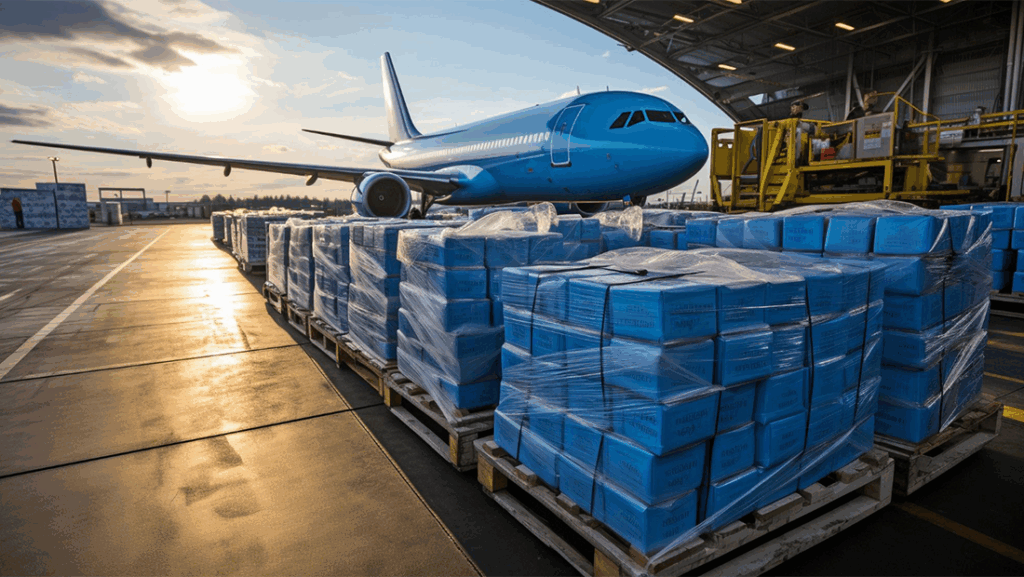
The freighter schedule is a timetable showing flight frequencies, departure airports, destinations, and transit days. Unlike passenger belly cargo, China Airlines freighters operate dedicated routes using Boeing 747-400F and 777F aircraft. Consequently, shippers can book slots in advance, ensuring that goods move on predictable schedules with less risk of cancellation.
Why Do Importers Need to Track Freighter Schedules?
Although forwarders provide quotes, importers benefit from studying schedules themselves. Doing so helps them:
Identify faster routes to North America or Europe.
Avoid peak-season bottlenecks at congested airports.
Choose direct flights over transshipment routes.
Estimate customs clearance timing more accurately.
Additionally, regular review of the China Airlines freighter schedule enables businesses to synchronize shipping with inventory planning.
Major hubs for the China Airlines freighter schedule include:
Shanghai Pudong (PVG): Electronics and machinery.
Shenzhen Bao’an (SZX): E-commerce exports.
Guangzhou Baiyun (CAN): Automotive parts.
Taipei Taoyuan (TPE): Global pharma and high-tech shipments.
Indeed, these hubs connect directly to Los Angeles, Chicago, London, Frankfurt, Dubai, and Sydney.
What Documents Are Needed for China Airlines Freighter Shipments?
Document
Purpose
Air Waybill (AWB)
Legal contract between airline and shipper.
Commercial Invoice
Declares product value and HS code.
Packing List
Confirms weight, dimensions, and item count.
Certificate of Origin
Confirms country of manufacture.
Import Security Filing
Required for US shipments (10+2).
Submitting documents on time prevents delays even if the freighter schedule is on track.
Pros and Cons of Relying on China Airlines Freighter Schedule
Pros
Cons
Predictable transit times
Higher cost vs sea freight
Wide network across continents
Capacity limits during peaks
Specialized cargo handling
Sensitive to weather delays
Reliable customs coordination
Not suitable for low-value goods
Thus, businesses must align schedule use with cargo value and urgency.
Conclusion
The China Airlines freighter schedule empowers businesses to streamline global shipping with predictable transit times and flexible cargo handling. Importers benefit from transparency in costs, consistent routes, and efficient customs clearance. Ultimately, working with a reliable freight forwarder ensures that schedule-based planning translates into reduced logistics risks and optimized supply chains.
Consult TJ China Freight Forwarding for the lowest quote. They will provide you with reliable, cost-effective service.