

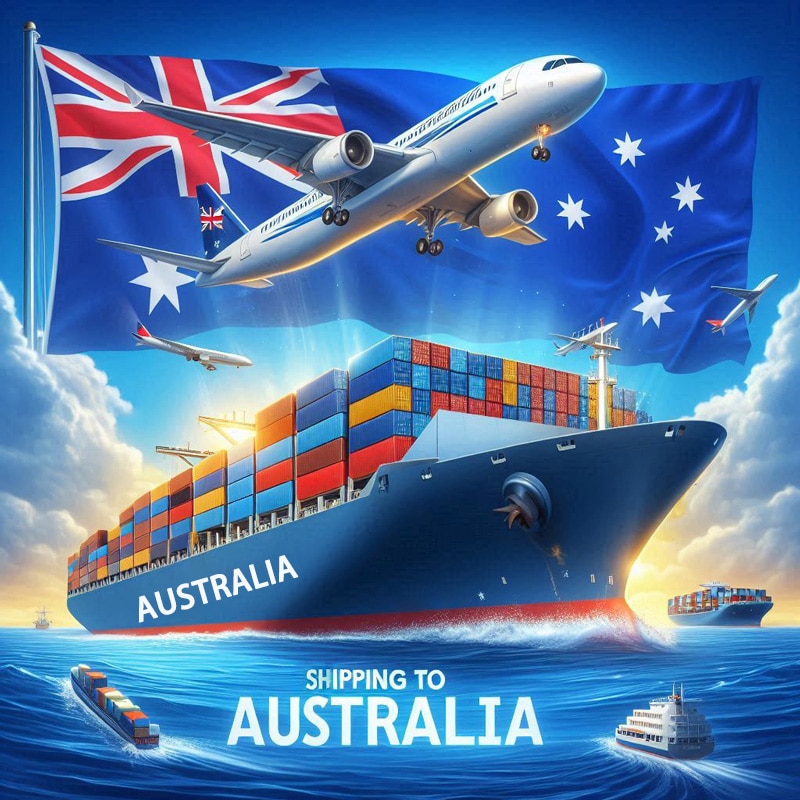

Why Choose LCL Shipping from Shenzhen to Australia?
LCL shipping allows multiple shippers to share space within one container, reducing overall shipping expenses. It’s perfect for importers with limited cargo volumes who still want professional service and reliable delivery.
Moreover, Shenzhen, as China’s manufacturing capital, offers vast export capacity and competitive freight rates through its major ports—Yantian, Shekou, and Chiwan. These connect directly with Sydney, Melbourne, Brisbane, and Fremantle, enabling efficient trade routes.
Additionally, choosing the best LCL shipping from Shenzhen to Australia ensures flexibility, as you only pay for the space your goods occupy, making it ideal for startups, e-commerce sellers, and seasonal importers.
How Long Does LCL Shipping Take from Shenzhen to Australia?
Transit time depends on destination ports and route schedules. On average, sea freight from Shenzhen to Australia takes 18–30 days, including handling and customs procedures.
| Destination Port (Australia) | Estimated Transit Time (Days) | Route Details |
|---|---|---|
| Sydney | 18–22 | Direct sailing |
| Melbourne | 22–26 | Direct or transshipment via Sydney |
| Brisbane | 23–28 | Regular sailings from Yantian Port |
| Fremantle (Perth) | 26–30 | Via Singapore transshipment |
However, transit times may vary due to weather, customs checks, or port congestion. Importers can minimize delays by submitting accurate documents and booking early.
How Much Does LCL Shipping from Shenzhen to Australia Cost?
LCL shipping costs are calculated based on chargeable volume (CBM) or weight, whichever is greater. Below is a cost overview for 2025:
| Cargo Volume (CBM) | Estimated Cost (USD) | Service Type | Remarks |
|---|---|---|---|
| 1–3 CBM | 110–130 per CBM | Standard LCL | Ideal for small e-commerce shipments |
| 4–8 CBM | 90–110 per CBM | Consolidated LCL | Lower cost for mid-size cargo |
| 9+ CBM | 75–90 per CBM | Direct LCL | Best rate for near-container volume |
Additional costs may include destination charges, customs clearance, and inland delivery. Although LCL rates per CBM are higher than FCL, total cost remains lower for small shipments.

Required Documents for LCL Shipping
Proper documentation ensures smooth customs clearance both in China and Australia. Below is a standard checklist:
| Document Name | Purpose |
|---|---|
| Commercial Invoice | Declares shipment value and description |
| Packing List | Details cargo quantity, dimensions, and weight |
| Bill of Lading (B/L) | Proof of shipment and ownership |
| Certificate of Origin | Required for duty calculation |
| Import Declaration | Mandatory for Australian Border Force |
| Insurance Certificate | Covers damage or loss during transit |
Moreover, specific items like electronics or food products may require import permits and product safety certificates.
Comparing LCL, FCL, and Air Freight
Choosing between LCL, FCL, or air freight depends on shipment size, urgency, and cost tolerance.
| Shipping Mode | Transit Time | Cost (USD/kg) | Best For | Advantages | Disadvantages |
|---|---|---|---|---|---|
| LCL (Sea) | 18–30 days | 0.8–1.2 | Small to mid-size shipments | Low cost, flexible volume | Slower, shared container |
| FCL (Sea) | 15–25 days | 0.4–0.6 | Bulk cargo | Secure, predictable | Full container needed |
| Air Freight | 3–7 days | 5–7 | Urgent, high-value goods | Fast delivery | High cost |
Without a doubt, LCL shipping from Shenzhen to Australia offers the most economical choice for smaller shipments while maintaining professional handling and delivery reliability.
Real Case Studies: LCL Shipping from Shenzhen to Australia
Case 1: Electronic Accessories
Origin: Shenzhen, China
Destination: Sydney, Australia
Cargo: Bluetooth speakers (2.5 CBM)
Cost: USD 295 total (USD 118/CBM)
Transit Time: 20 days
Result: Smooth customs clearance, allowing the importer to meet e-commerce sale deadlines efficiently.
Case 2: Clothing and Textiles
Origin: Shenzhen, China
Destination: Melbourne, Australia
Cargo: Garments and accessories (6.5 CBM)
Cost: USD 640 (USD 98/CBM)
Transit Time: 23 days
Result: The retailer saved 25% in logistics costs compared to air freight while maintaining stock availability.
Need a reliable logistics partner? Share your shipment details and we’ll provide a tailored quotation quickly and accurately.
How to Ensure Smooth Customs Clearance in Australia
Australian customs regulations are strict, focusing heavily on biosecurity and import compliance. Here’s a step-by-step overview:
- Pre-Shipment Filing: Submit import declarations electronically via ICS.
- Customs Valuation: Duties calculated based on CIF (Cost + Insurance + Freight).
- Biosecurity Inspection: Quarantine checks for wood, food, and plant materials.
- Duty and GST Payment: Usually 5–10% import duty plus 10% GST.
- Cargo Release: Goods cleared for inland transportation.
To illustrate, hiring an experienced freight forwarder helps avoid delays and ensure all documents meet Australian Border Force and DAFF requirements.
How to Choose the Best LCL Shipping Provider
Selecting a reliable logistics partner ensures safe handling, cost efficiency, and on-time delivery. Consider the following criteria:
- Industry Experience: Years of experience managing China–Australia routes.
- Network Strength: Partnerships with top carriers and Australian agents.
- Transparent Pricing: All-inclusive quotes without hidden surcharges.
- Tracking Capability: Real-time container monitoring.
- Customer Support: Prompt assistance for inquiries and documentation.
TopChinaFreight, for instance, provides fully managed LCL shipping services from Shenzhen to all major Australian ports—covering customs, consolidation, and door-to-door delivery.
Conclusion
To summarize, choosing the best LCL shipping from Shenzhen to Australia ensures affordability, flexibility, and reliability for importers handling small to medium cargo volumes. With optimized consolidation, accurate documentation, and expert customs management, LCL shipping offers an efficient pathway to expand your business in the Australian market. Partnering with TopChinaFreight guarantees transparent pricing, professional handling, and smooth logistics—helping your goods reach Australia safely, on time, and within budget. 🚢
Request a Quote
Need a tailored solution for your shipping from China?Let TJ China Freight Forwarder assist you with reliable, cost-effective service.
FAQ:
Q1.How long does LCL shipping from Shenzhen to Australia take?
Transit time typically ranges between 18 and 30 days, depending on the destination port and customs procedures.
Q2.How are LCL shipping costs calculated?
Costs are based on chargeable volume (CBM) or weight, whichever is higher, plus destination and handling charges.
Q3.Can I track my LCL shipment online?
Yes, most freight forwarders provide tracking systems for real-time container updates throughout the sea journey.
Q4.What’s the difference between LCL and FCL shipping?
LCL shares container space with others, while FCL uses a full container for one shipment.
Q5.Are there restricted goods for shipping from China to Australia?
Yes, items like batteries, wood, and certain chemicals require special permits and compliance with Australian import laws.