

- By Della tj
- December 1, 2025
- Uncategorized
Shipping temperature-sensitive furniture in a Reefer Full Container Load (FCL) from China to Houston requires precise coordination, reliable carriers, and accurate documentation. This guide outlines each step of the Reefer FCL booking process, offering practical insight into timelines, freight rates, and customs procedures.

What Is a Reefer FCL and Why Use It for Furniture?
A Reefer FCL is a refrigerated container used to maintain controlled temperature and humidity during transport. Although commonly applied to food or pharmaceuticals, many types of luxury furniture and high-value wooden products benefit from this mode because it prevents moisture damage, warping, and mold.
Moreover, Reefer containers offer consistent air circulation and stable climates from Shenzhen, Shanghai, or Ningbo ports all the way to Houston.
| Feature | Reefer FCL | Standard FCL |
|---|---|---|
| Temperature Control | Yes | No |
| Suitable Cargo | Furniture, wood, leather | General goods |
| Cost | Higher | Lower |
| Transit Time | 28–35 days | 28–35 days |
How Does the Reefer FCL Booking Process Work?
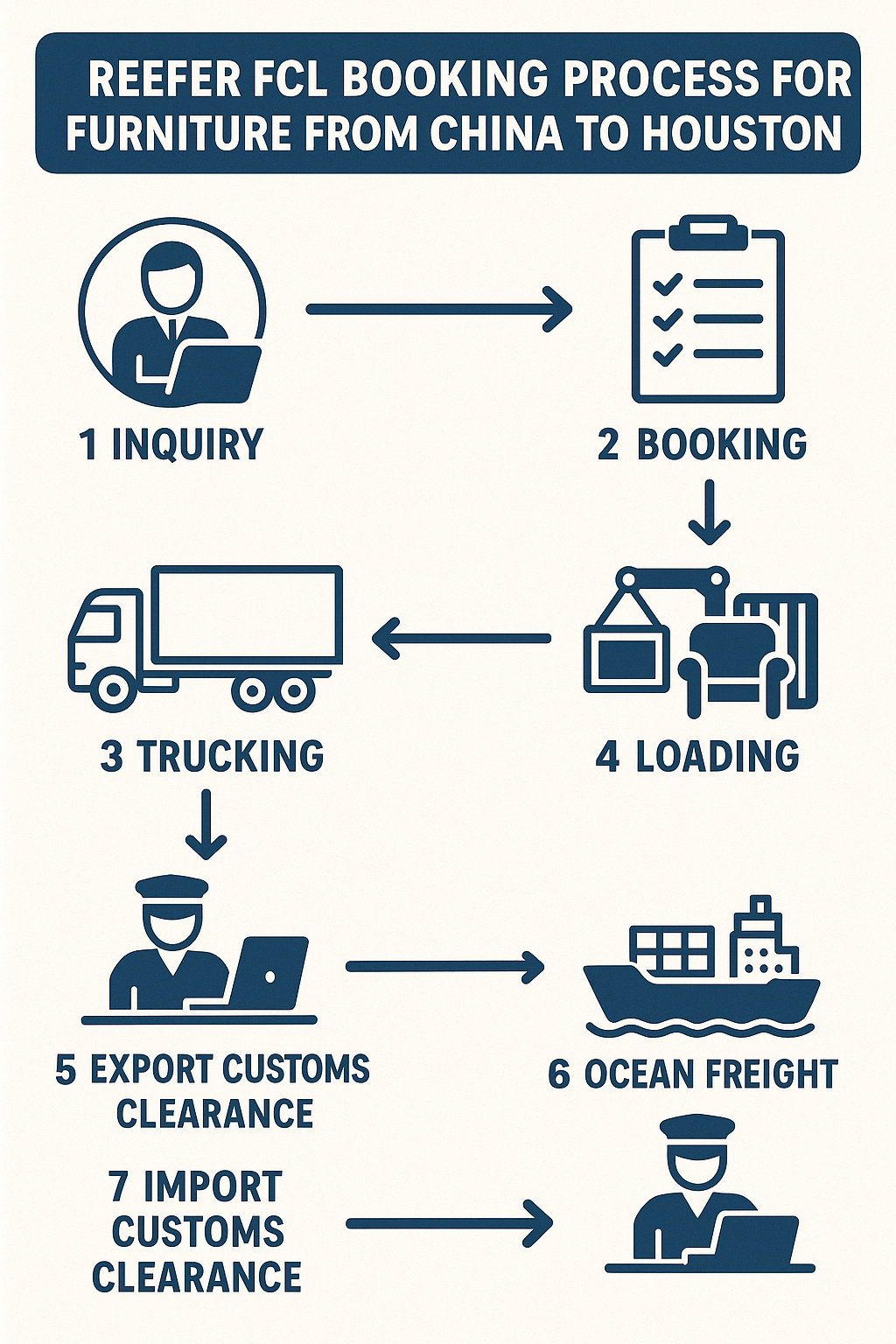
The booking process typically includes these essential steps:
- Cargo Evaluation – Verify furniture volume, CBM, and packaging suitability.
- Quotation Request – Obtain rates covering ocean freight, customs, and insurance.
- Space Booking – Reserve Reefer equipment early since availability is limited.
- Container Pickup & Stuffing – Pack goods under supervision to ensure airflow.
- Export Customs Clearance – Prepare documentation for China’s customs.
- Sailing & Tracking – Monitor vessel progress to Houston.
- Arrival & Import Clearance – File ISF and submit entry documents.
Each stage demands coordination between shipper, freight forwarder, and consignee. Missing any document can delay your shipment.
What Documents Are Required for Customs Clearance?
To clear both export and import procedures efficiently, ensure that all papers are complete and accurate.
| Document Type | Description | Issued By |
|---|---|---|
| Bill of Lading | Proof of shipment | Carrier |
| Commercial Invoice | Declares value & HS code | Seller |
| Packing List | Specifies furniture pieces | Exporter |
| Certificate of Origin | Verifies source | Chamber of Commerce |
| Insurance Policy | Covers cargo risk | Insurance firm |
| Import Entry (ISF) | Filed before arrival | U.S. importer |
Proper customs documentation prevents demurrage or detention charges, ensuring the Reefer FCL cargo is released quickly at Houston Port.
What Are the Transit Times and Costs from China to Houston?
Transit times vary based on the origin port and shipping line schedule.
Typical transit periods for Reefer FCL shipments are:
| Origin Port | Transit Time (Days) | Average Cost (USD/40HQ Reefer) |
|---|---|---|
| Shenzhen | 30–33 | 4,600–5,200 |
| Shanghai | 32–35 | 4,800–5,400 |
| Ningbo | 31–34 | 4,700–5,300 |
Prices fluctuate depending on peak season, container shortages, and fuel surcharges. Booking early with a trusted forwarder like TopChinaFreight helps lock in favorable rates and ensures reliable Reefer container availability.
Real-World Case Studies
Case 1 – Premium Wooden Furniture
Origin: Shenzhen
Destination: Houston
Container Type: 40HQ Reefer
Cargo Volume: 58 CBM (oak tables, leather chairs)
Shipping Cost: USD 5,100
Transit Time: 32 days
Highlight: Stable temperature of 23°C preserved leather texture throughout transit.
Case 2 – Designer Office Sets
Origin: Ningbo
Destination: Houston
Container Type: 20GP Reefer
Cargo Volume: 25 CBM
Shipping Cost: USD 3,850
Transit Time: 31 days
Highlight: Precise humidity control prevented veneer bubbling during customs inspection.
How to Choose the Right Reefer Container and Temperature Setting?
Furniture types vary in temperature tolerance. For example, wooden or rattan items need moderate humidity, while leather furniture must stay within 20–25°C.
| Furniture Type | Recommended Temperature | Notes |
|---|---|---|
| Solid Wood | 20–25°C | Prevents cracking |
| Leather Upholstery | 22–24°C | Avoids dryness |
| Rattan & Cane | 18–22°C | Maintains flexibility |
Therefore, discuss precise requirements with your forwarder during booking to set the Reefer’s parameters correctly.
Need a reliable logistics partner? Share your shipment details and we’ll provide a tailored quotation quickly and accurately.
What Are the Main Advantages of Reefer FCL for Furniture Transport?
Using a Reefer container may cost more, but the benefits often outweigh expenses:
- Maintains humidity and temperature stability.
- Reduces product returns caused by damage.
- Meets quality control standards for export contracts.
- Enables long-distance delivery without deterioration.
- Offers GPS tracking and alarm alerts for condition monitoring.
Thus, Reefer FCL shipping ensures your goods arrive in showroom condition, ready for distribution across Texas and nearby states.
How Can You Optimize the Booking Process to Save Time and Cost?
Efficiency depends on early coordination and smart planning. Consider these strategies:
- Book 3–4 weeks ahead of production completion.
- Consolidate shipments to maximize container utilization.
- Prepare customs files in advance to avoid demurrage.
- Purchase insurance covering temperature deviations.
- Track schedules through digital platforms for updates.
By partnering with an experienced provider like TopChinaFreight, importers can streamline every step from port booking to final delivery.
Conclusion
The Reefer FCL booking process for furniture from China to Houston demands detailed planning, precise temperature control, and expert handling. With complete documentation, proper coordination, and early booking, businesses can reduce risks and maintain cargo quality. Working with TopChinaFreight ensures transparency in costs, reliable sailing schedules, and professional customs clearance from start to finish.
Request a Quote
Need a tailored solution for your shipping from China?Let TJ China Freight Forwarder assist you with reliable, cost-effective service.
FAQ:
Q1.How long does Reefer FCL shipping from China to Houston take?
Typically, Reefer FCL furniture shipments take about 30–35 days, depending on the port and carrier schedule.
Q2.What temperature should I set for wooden furniture in a Reefer container?
Wooden furniture should be transported at 20–25°C to prevent cracking, warping, or mold growth during transit.
Q3.Can I mix different furniture types in one Reefer container?
Yes, but ensure temperature and humidity settings are suitable for all materials inside the same shipment.
Q4.How early should I book a Reefer FCL for Houston delivery?
It’s recommended to book at least three weeks in advance to secure equipment and avoid rate increases.
Q5.What customs documents are mandatory for Reefer FCL furniture?
You’ll need a Bill of Lading, commercial invoice, packing list, and certificate of origin for customs clearance.