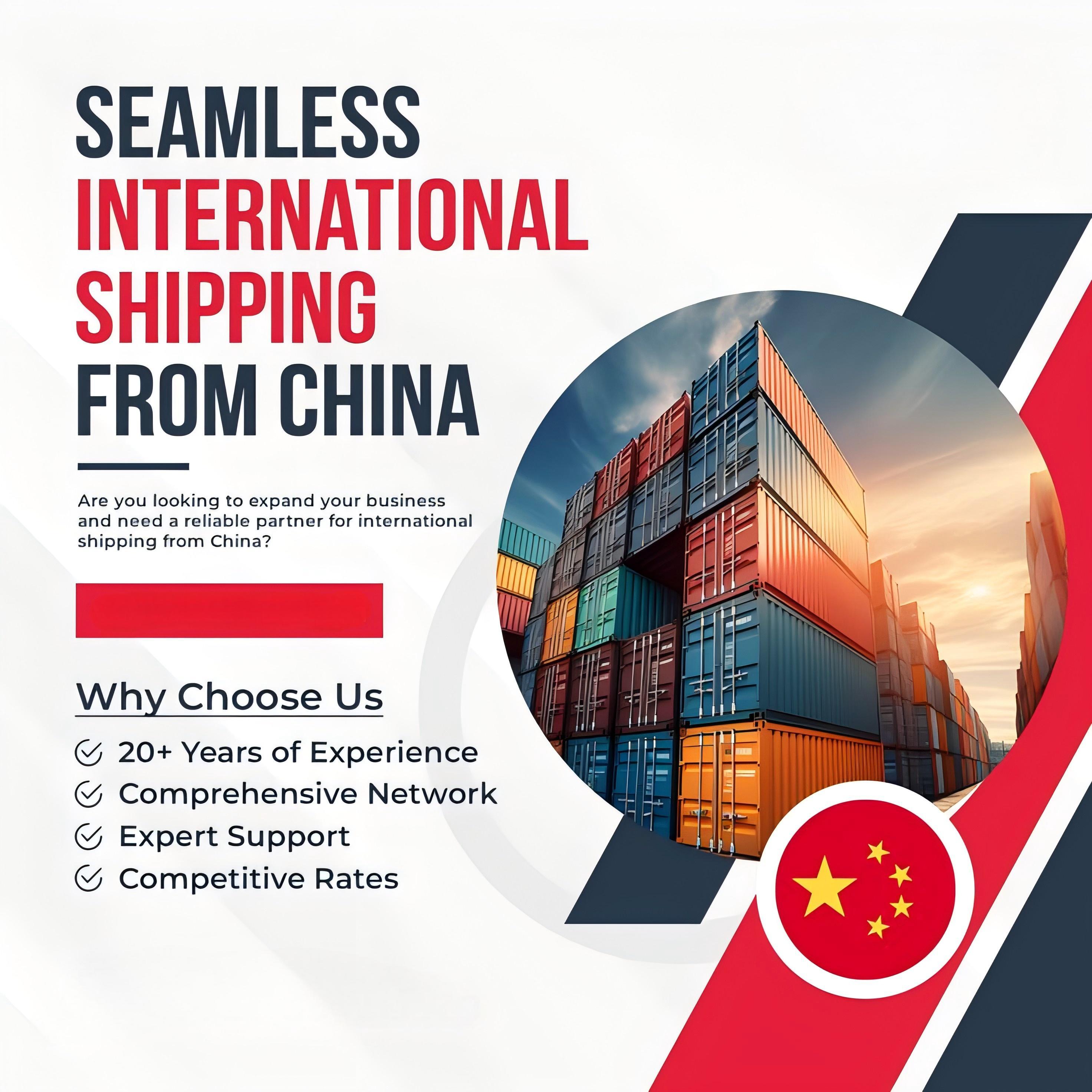
Freight Forwarding China to Belgium: Your Complete Shipping Guide
Shipping goods from China to Belgium involves a complex network of logistics, regulations, and strategic decisions. Importers often face challenges in optimizing costs, ensuring timely delivery, and navigating intricate customs procedures. This comprehensive guide, brought to you by Top China Freight, aims to simplify the entire process, providing clarity and actionable insights for your supply chain.

Why Choose Freight Forwarding from China to Belgium?
Belgium, strategically located at the heart of Europe, serves as a crucial gateway for goods entering the continent. Its well-developed infrastructure, including the Port of Antwerp-Bruges and Brussels Airport, facilitates efficient distribution across the EU market. Therefore, selecting a reliable freight forwarder for your China to Belgium shipments is paramount for successful international trade.
Furthermore, effective freight forwarding ensures your products reach their destination efficiently and cost-effectively. A seasoned logistics partner can streamline customs processes, minimize transit times, and reduce overall shipping costs. They provide invaluable expertise, particularly for businesses importing a variety of goods from China.
The Strategic Importance of Belgium’s Ports
The Port of Antwerp-Bruges, Europe’s second-largest port, handles millions of containers annually. Its extensive connectivity via road, rail, and inland waterways makes it an ideal entry point for goods destined for Belgium and neighboring countries. Consequently, many importers prioritize this port for their FCL and LCL sea freight from China.
Brussels Airport also plays a significant role, especially for time-sensitive or high-value cargo. As a matter of fact, its advanced cargo facilities support rapid air freight operations, ensuring quick turnaround times. Understanding these key hubs is essential for planning your optimal shipping route.
Navigating Complex Logistics
International freight forwarding from China to Belgium involves navigating a myriad of regulations, tariffs, and logistical challenges. Without proper guidance, businesses can face significant delays and unexpected expenses. Moreover, an experienced freight forwarder acts as your advocate, managing all aspects from origin to destination.
Indeed, they handle everything from booking cargo space to preparing documentation and arranging customs clearance. This comprehensive support allows businesses to focus on their core operations, confident that their supply chain is in expert hands. Ultimately, choosing the right partner is a strategic business decision.
Key Shipping Methods from China to Belgium
Importers have several viable options for shipping goods from China to Belgium, each with distinct advantages and disadvantages. The choice typically depends on factors such as cargo volume, urgency, and budget. Consequently, understanding these methods is crucial for making an informed decision about your shipping from China to Europe.
Considerably, the most common shipping methods include sea freight, air freight, and increasingly, rail freight. Each method offers a different balance of speed, cost, and capacity. Therefore, evaluating your specific needs against these options is the first step in planning your logistics.
| Shipping Method | Typical Transit Time | Cost Efficiency | Best For |
|---|---|---|---|
| Sea Freight (FCL/LCL) | 28-35 days | Very High | Bulk goods, heavy items, non-urgent, large volumes |
| Air Freight | 3-7 days | Low (Expensive) | Urgent, high-value, perishable goods, samples |
| Rail Freight | 18-25 days | Medium | Mid-volume, time-sensitive but not critical, balanced approach |
Sea Freight: The Most Common Option
Sea freight remains the most economical option for large volumes and heavy cargo. It is ideal for non-urgent shipments, offering significant cost savings per unit. Typically, goods are shipped in containers, either as Full Container Load (FCL) or Less than Container Load (LCL).
However, transit times for sea freight from major Chinese ports like Shanghai, Ningbo, or Shenzhen to Antwerp-Bruges usually range from 28 to 35 days. While slower, its cost-effectiveness makes it the preferred choice for bulk commodities, machinery, and consumer goods with flexible delivery schedules.
Air Freight: For Speed and Urgency
For time-sensitive or high-value shipments, air freight offers unparalleled speed. Flights from major Chinese airports (e.g., Shanghai Pudong, Guangzhou Baiyun) to Brussels Airport (BRU) typically take 3-7 days. Obviously, this speed comes at a higher cost.
Nevertheless, air freight is indispensable for perishable goods, urgent samples, or products with short shelf lives. It minimizes inventory holding costs and allows businesses to respond quickly to market demands. However, weight and volume restrictions apply, impacting overall freight rates.
Rail Freight: A Balanced Approach
Rail freight has emerged as a compelling alternative, bridging the gap between sea and air freight. It offers a faster transit time than sea freight (18-25 days) at a lower cost than air freight. Services operate from various Chinese cities to European rail hubs, often connecting to Belgium via intermodal transport.
Moreover, rail freight is increasingly environmentally friendly and less susceptible to weather delays than sea freight. It is an excellent option for mid-range urgency and volume, providing a reliable and cost-efficient shipping solution for many types of cargo. This method is particularly beneficial for businesses looking for a balance.
Understanding Transit Times and Costs
The total cost and transit time for freight forwarding from China to Belgium are influenced by numerous factors. These include the chosen shipping method, cargo volume, specific origin and destination points, and current market conditions. Consequently, obtaining an accurate quote requires a detailed assessment of your shipment’s characteristics.
Indeed, understanding these variables helps in budgeting and planning your inventory effectively. Fluctuations in fuel prices, peak seasons, and carrier capacity can also significantly impact freight rates. Therefore, staying informed about market trends is crucial.
Factors Influencing Shipping Costs
Several key elements contribute to the overall shipping cost. Ocean or air freight charges form the base, but additional costs like terminal handling charges (THC), documentation fees, customs duties, and local delivery charges must be factored in. Furthermore, insurance costs are also an important consideration.
Additionally, the Incoterms chosen for your shipment (e.g., FOB, CIF, EXW) dictate which party is responsible for various costs and risks. For instance, an EXW (Ex Works) service means the buyer bears almost all costs from the factory gate. Conversely, CIF (Cost, Insurance, and Freight) places more responsibility on the seller up to the destination port.
Typical Transit Times for Each Method
For sea freight, direct routes from major Chinese ports to Antwerp-Bruges typically take 28-35 days. Transshipment routes, though sometimes cheaper, can add an extra 5-7 days. Meanwhile, air cargo usually arrives within 3-7 days from airport to airport.
Rail freight offers a middle ground, with transit times averaging 18-25 days to European rail terminals, followed by onward distribution to Belgium. These are port-to-port or airport-to-airport estimates; door-to-door delivery will naturally add a few extra days for local logistics. Based on Q3 2024 market rates, FCL 40HQ from China to Antwerp can range from $3,000-$4,200.

Essential Documentation and Customs Clearance
Successfully importing from China to Belgium requires meticulous attention to documentation and adherence to customs regulations. Any discrepancies can lead to significant delays, fines, or even seizure of goods. Consequently, working with a proficient customs brokerage partner is paramount.
Indeed, proper preparation ensures a smooth customs clearance process in both China and Belgium. Understanding the required paperwork and import duties is a critical step for any international shipment. Therefore, always verify the latest requirements before shipping.
| Document Type | Purpose | Required By |
|---|---|---|
| Commercial Invoice | Details goods, value, seller, buyer | Customs, Buyer, Seller |
| Packing List | Details contents of each package | Customs, Buyer, Carrier |
| Bill of Lading (B/L) / Air Waybill (AWB) | Contract of carriage, title to goods | Carrier, Customs, Buyer |
| Certificate of Origin | Confirms country of manufacture | Customs, Buyer (for tariffs) |
Required Export Documents from China
To export goods from China, essential documents typically include the Commercial Invoice, Packing List, Bill of Lading (for sea freight) or Air Waybill (for air freight), and a Certificate of Origin. Furthermore, some goods may require specific export licenses or permits from Chinese authorities.
Accurate and complete documentation is vital to avoid hold-ups at the port of origin. Your freight forwarder will assist in preparing and verifying these documents. This proactive approach prevents costly errors and ensures compliance with Chinese export laws.
Import Procedures in Belgium
Upon arrival in Belgium, your goods will undergo customs clearance. Key import documents include the commercial invoice, packing list, bill of lading/air waybill, and the Certificate of Origin. Additionally, an Entry Summary Declaration (ENS) is required for goods entering the EU.
Importers must also pay applicable customs duties and VAT. Belgium, as an EU member state, follows the Union Customs Code. It is crucial to correctly classify your goods using the Harmonized System (HS) codes to determine the correct tariffs. A freight forwarder can manage this complex process, ensuring timely release of your cargo.
How to Select the Right Freight Forwarder?
Choosing a reliable freight forwarder for your China to Belgium shipments is perhaps the most critical decision. The right partner can significantly impact your supply chain’s efficiency, cost-effectiveness, and reliability. Therefore, due diligence is essential before committing to a service provider.
Indeed, a good freight forwarder should act as an extension of your business, offering transparent communication and proactive problem-solving. They are more than just a shipping agent; they are a strategic logistics partner. Consequently, consider their track record and capabilities carefully.
Experience and Network
Look for a freight forwarder with extensive experience in the China-Europe trade lane, specifically to Belgium. Their established network of carriers, customs brokers, and local agents in both countries is invaluable. This network ensures seamless coordination and efficient handling of your cargo at every stage.
Furthermore, a strong network means better access to competitive rates and reliable services. An experienced forwarder will also be well-versed in handling various cargo types and can offer tailored solutions for your specific needs. Ask about their coverage and partnerships.
Technology and Transparency
Modern freight forwarding relies heavily on technology for tracking, communication, and efficiency. Choose a forwarder that offers robust tracking systems, allowing you to monitor your shipment’s progress in real-time. Transparency in pricing and processes is also crucial.
Ultimately, a good partner provides clear communication regarding potential delays or issues, along with proposed solutions. They should offer detailed quotes without hidden fees, ensuring you have a complete understanding of your total landed costs. This level of service builds trust and long-term partnerships.
Real-World Scenarios: China to Belgium Shipments
To illustrate the practicalities of freight forwarding from China to Belgium, let’s examine a few real-world case studies. These examples highlight different shipping methods and cargo types, offering insights into typical costs and transit times. Importantly, these scenarios reflect common challenges and successful strategies.
Undoubtedly, understanding these examples can help you better plan your own import operations. Each case demonstrates how various factors influence the final logistics decisions. Therefore, consider these illustrations as a guide for your specific shipping requirements.
Case Study 1: Large Volume, Cost-Effective Sea Freight
This scenario demonstrates the efficiency of sea freight for bulk goods.
Key Insight: Strategic port selection and FCL utilization provided optimal cost-efficiency for large, non-urgent cargo.
| Detail | Description |
|---|---|
| Route | Shanghai, China Antwerp, Belgium |
| Cargo | Textile machinery parts, 25 CBM, 15,000 kg |
| Container | 1 x 20GP (Full Container Load) |
| Shipping Details | Carrier: COSCO, Port of Loading: Shanghai, Port of Discharge: Antwerp-Bruges, Route Type: Direct |
| Cost Breakdown (Based on Q4 2024 rates) | Ocean Freight: $2,200; Origin Charges: $350; Destination Charges: $400; Customs & Duties (estimated): $550; Total Landed Cost: $3,500 |
| Timeline | Booking to Loading: 5 days; Sea Transit: 30 days; Customs Clearance: 3 days; Total Door-to-Door: 38 days |
Case Study 2: Time-Sensitive Air Freight for High-Value Goods
This example showcases air freight for urgent, high-value electronics.
Key Insight: Despite higher costs, air freight was essential for meeting tight market deadlines and reducing inventory risk for high-value goods.
| Detail | Description |
|---|---|
| Route | Shenzhen, China Brussels, Belgium |
| Cargo | Consumer electronics, 3 CBM, 800 kg |
| Container | Air Cargo (Consolidated) |
| Shipping Details | Carrier: Major Airline, Port of Loading: Shenzhen Bao’an (SZX), Port of Discharge: Brussels (BRU), Route Type: Direct |
| Cost Breakdown (Typical rates as of early 2025) | Air Freight: $3,800; Origin Charges: $150; Destination Charges: $200; Customs & Duties (estimated): $700; Total Landed Cost: $4,850 |
| Timeline | Booking to Loading: 2 days; Air Transit: 4 days; Customs Clearance: 1 day; Total Door-to-Door: 7 days |
Case Study 3: Balanced Rail Solution for Mid-Volume
Here, rail freight provides a cost-effective yet faster alternative to sea.
Key Insight: Rail freight offered a perfect balance of speed and cost for mid-volume goods, avoiding sea freight delays and high air freight costs.
| Detail | Description |
|---|---|
| Route | Chongqing, China Liège, Belgium (via Duisburg) |
| Cargo | Auto parts, 10 CBM, 5,000 kg |
| Container | LCL Rail Cargo |
| Shipping Details | Carrier: China-Europe Express Train, Port of Loading: Chongqing, Port of Discharge: Liège (via rail hub in Germany), Route Type: Intermodal |
| Cost Breakdown (Based on Q1 2025 market rates) | Rail Freight: $1,800; Origin Charges: $200; Destination Charges: $250; Customs & Duties (estimated): $450; Total Landed Cost: $2,700 |
| Timeline | Booking to Loading: 4 days; Rail Transit: 20 days; Customs Clearance: 2 days; Total Door-to-Door: 26 days |

Optimizing Your Supply Chain: Tips for Importers
Beyond choosing a shipping method, several strategies can further optimize your supply chain for imports from China to Belgium. Proactive planning and smart decision-making can lead to significant cost savings and improved efficiency. Furthermore, understanding these nuances can give you a competitive edge.
Considerably, these tips focus on maximizing value and minimizing risks throughout the shipping process. Implementing these practices can transform your logistics from a challenge into a strategic advantage. Therefore, constant evaluation and adaptation are key.
Consolidation and LCL vs FCL
For smaller shipments, consolidating multiple orders into a single Less than Container Load (LCL) shipment can be very cost-effective. However, LCL shipments may experience longer transit times due to the need for consolidation and deconsolidation. Conversely, Full Container Load (FCL) offers dedicated space and often faster transit for larger volumes.
Indeed, the threshold for switching from LCL to FCL is typically around 15-20 CBM. For instance, if your cargo is 15 CBM, LCL at $50-80/CBM might be more economical than a full container. Evaluating your volume and urgency will guide this decision. Our Amazon FBA services often help consolidate shipments for efficiency.
Insurance and Risk Management
Protecting your cargo against unforeseen events during transit is crucial. Marine cargo insurance or air cargo insurance provides financial coverage against loss, damage, or theft. Without a doubt, the cost of insurance is minimal compared to the potential loss of your goods.
Additionally, proactive risk management involves vetting suppliers, understanding geopolitical risks, and having contingency plans for potential disruptions. For example, current Red Sea disruptions have shifted routes, increasing transit times and costs for some sea freight from China to Belgium. A reliable freight forwarder will advise on these matters.
How Does Sea Freight Compare to Other Shipping Options?
When planning freight forwarding from China to Belgium, a critical decision revolves around choosing the most suitable transport method. While sea freight is often the default for cost efficiency, it is important to objectively compare it against air and rail options. Each method presents unique trade-offs in terms of speed, cost, and cargo suitability.
Indeed, understanding these comparisons allows importers to make strategic choices that align with their business objectives. For instance, prioritizing speed for a new product launch might justify the higher cost of air freight. Conversely, a stable, high-volume product line would benefit most from economical sea freight.
| Shipping Method | Cost Range (20GP/100kg) | Transit Time | Best For | Limitations |
|---|---|---|---|---|
| Sea Freight (FCL) | $2,200 – $3,800 (40GP) | 28-35 days | Large volumes, heavy cargo, non-urgent goods, cost-sensitive | Slowest, susceptible to port congestion, longer lead times |
| Sea Freight (LCL) | $50 – $80 per CBM | 35-45 days | Smaller shipments (under 15 CBM), cost-sensitive | Slower than FCL, potential for delays due to consolidation |
| Air Freight | $4 – $8 per kg | 3-7 days | Urgent, high-value, perishable goods, samples | Most expensive, weight/volume restrictions, environmental impact |
| Rail Freight | $1.5 – $3 per kg | 18-25 days | Mid-volume, moderate urgency, environmentally conscious | Limited routes/schedules compared to sea, less capacity than FCL sea |
Which Option Should You Choose?
The optimal shipping method for your freight forwarding China to Belgium depends entirely on your specific business priorities. There is no one-size-fits-all solution; rather, it’s about aligning logistics with your overall strategy. Therefore, consider these criteria carefully.
Ultimately, making the right choice can significantly impact your bottom line and customer satisfaction. A flexible approach, sometimes combining methods, can also yield the best results. For example, using express service for urgent small parcels and sea freight for bulk orders.
Budget Priority
If cost is your primary concern and you have ample lead time, sea freight (especially FCL) is the most economical option. For smaller volumes, LCL sea freight offers cost savings but comes with slightly longer transit times. Always compare these rates carefully.
Speed Priority
When speed is paramount, particularly for urgent orders or high-value, time-sensitive goods, air freight is the clear choice. If you need a faster option than sea but air freight is too expensive, rail freight presents a strong middle-ground solution, balancing speed and cost effectively.
Cargo Type Considerations
For bulky, heavy, or non-perishable goods, sea freight is ideal. High-value, fragile, or perishable items benefit from the speed and reduced handling of air freight. Rail freight is suitable for a wide range of general cargo, including machinery, electronics, and consumer goods, offering robust security.
Volume thresholds also play a role; for shipments under 15 CBM, LCL is often more economical. However, for volumes exceeding this, an FCL container typically offers better value and efficiency. Always analyze your cargo specifics.
Conclusion: Master Your Freight Forwarding China to Belgium Logistics
Navigating the complexities of freight forwarding from China to Belgium requires careful planning, an understanding of various shipping methods, and a reliable logistics partner. Whether you choose sea, air, or rail, each option presents distinct advantages tailored to different business needs. Ultimately, success hinges on informed decisions regarding cost, speed, and compliance.
By leveraging expert services and staying informed about market conditions, importers can optimize their supply chains, reduce risks, and ensure efficient delivery of goods. Partnering with an experienced freight forwarder like Top China Freight is your key to unlocking seamless international trade and mastering your China to Belgium logistics.
Ready to streamline your logistics?
Ready to streamline your freight forwarding from China to Belgium? Contact Top China Freight today for a customized quote and expert guidance. Let us handle your logistics, so you can focus on growing your business.
Request Quote