

Export Documentation China to Spain: The Ultimate 2025 Shipping Guide
Navigating the complex landscape of international trade requires a precise understanding of export documentation China to Spain to ensure your goods reach Barcelona or Madrid without delay. Many importers face significant hurdles when paperwork is incomplete, leading to costly storage fees at the port or even cargo rejection. By partnering with Top China Freight, you can streamline your entire logistics chain and focus on growing your business while our experts handle the technical details of Mediterranean trade compliance.

What is the Mandatory Export Documentation China to Spain?
Shipping goods across continents involves a rigorous verification process where every piece of paper acts as a passport for your cargo. The Spanish customs authority, known as Agencia Tributaria, maintains strict standards for all incoming shipments from non-European Union countries. Consequently, missing a single signature or providing an incorrect Harmonized System code can result in weeks of delays.
Preparation begins with the Commercial Invoice, which serves as the primary record of the transaction between the exporter and the importer. This document must clearly state the value of the goods, the currency used, and the specific Incoterms agreed upon by both parties. Furthermore, it should include the EORI numbers for both the sender and the receiver to facilitate automated processing.
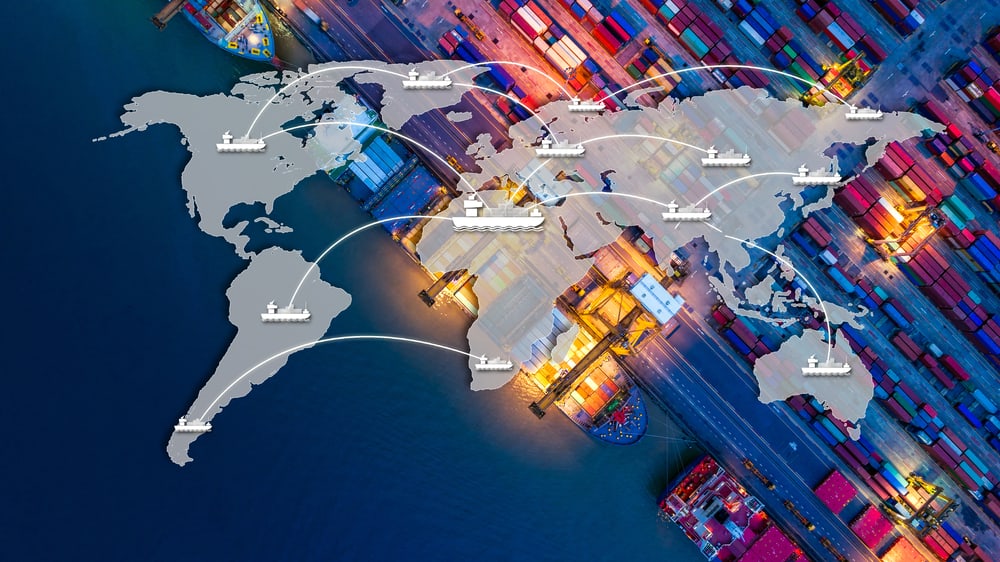
Packing lists provide a detailed breakdown of every item within the shipment, including net and gross weights. Indeed, customs officials use this to verify that the physical contents of the container match the declared value on the invoice. Without an accurate packing list, your cargo might undergo a physical inspection, adding significant costs to your total landed price.
Understanding the Role of the Bill of Lading
The Bill of Lading stands as the most critical legal document in the shipping process from China to Spain. It functions simultaneously as a contract of carriage, a receipt for the goods, and a document of title. Therefore, the information on this form must perfectly align with all other export documentation China to Spain to avoid legal complications at the port of discharge.
Choosing between a Master Bill of Lading and a House Bill of Lading depends on your specific logistics arrangement. For most small to medium businesses using sea freight, a House Bill of Lading issued by a freight forwarder offers more flexibility. Meanwhile, direct shipments via major carriers usually involve a Master Bill of Lading that represents the entire container load.
Electronic versions of these documents are becoming more common as the industry moves toward digitalization. However, some Spanish banks still require original paper copies for certain types of letters of credit or financing arrangements. Always confirm the specific requirements of your financial institution before the vessel departs from the Chinese port.
How Does Sea Freight Compare to Other Shipping Options?
Selecting the right transportation mode is a balancing act between speed and budget. While ocean transport remains the most popular choice for bulk goods, other methods offer advantages for specific types of cargo. For instance, high-value electronics often travel via air freight to minimize the time capital is tied up in transit.
Rail transport has emerged as a viable middle-ground solution for companies looking to bypass the longer ocean routes around the Cape of Good Hope. This route typically connects major Chinese hubs like Zhengzhou or Xi’an to European terminals, eventually reaching Spain via truck or feeder rail. Nevertheless, the cost is significantly higher than ocean transport, making it suitable for seasonal inventory peaks.
Compare the following options to determine which strategy best fits your current supply chain requirements and delivery deadlines.
| Shipping Method | Cost Range (USD) | Transit Time | Best For |
|---|---|---|---|
| Sea Freight (FCL 40HQ) | $3,000 – $4,200 | 30-40 Days | Large volumes and heavy machinery |
| Air Freight (per kg) | $5.50 – $11.00 | 4-8 Days | Urgent samples and high-value items |
| Rail Freight (per 40FT) | $4,500 – $6,500 | 20-28 Days | Time-sensitive industrial components |
| Express Service | $8.00 – $15.00 | 3-5 Days | Small parcels and vital documents |
The Importance of EORI and VAT for Spanish Imports
Every business importing goods into Spain must possess an Economic Operator Registration and Identification number. This unique identifier allows the European customs system to track shipments and ensure that all taxes are properly accounted for. Additionally, you must ensure your Spanish VAT number is active and recognized by the VIES system for intra-community trade benefits.
Failing to provide a valid EORI number will result in your goods being held at the Spanish border indefinitely. Consequently, many first-time importers experience frustration when they realize their paperwork is technically correct but lacks the necessary regulatory identifiers. You should verify your registration status at least two weeks before your cargo is scheduled to arrive at the Port of Valencia or Algeciras.
Customs brokers play a vital role in managing these registrations and ensuring that the correct HS codes are applied to your products. Our specialized customs brokerage team can assist you in navigating these administrative hurdles to prevent unnecessary fines. In addition, we provide guidance on duty relief programs that might apply to specific categories of Chinese exports.
Case Study 1: Electronics from Shenzhen to Valencia
Case Study Details:
Route: Shenzhen, China to Valencia, Spain. Cargo: Consumer Electronics, 68 CBM, 14,500 kg. Container: 40HQ. Shipping Details: Carrier: COSCO. Port of Loading: Shenzhen. Port of Discharge: Valencia. Route Type: Direct. Cost Breakdown: Ocean Freight: $3,250. Origin Charges: $450. Destination Charges: $580. Customs and Duties: $4,200. Total Landed Cost: $8,480. Timeline: Booking to Loading: 4 days. Sea Transit: 32 days. Customs Clearance: 2 days. Total Door-to-Door: 38 days. Key Insight: Accurate HS coding for lithium batteries prevented a hazardous materials delay at the origin.
Case Study 2: Fast Fashion Textiles from Ningbo to Barcelona
Case Study Details:
Route: Ningbo, China to Barcelona, Spain. Cargo: Garments and Textiles, 8 CBM, 2,100 kg. Container: LCL. Shipping Details: Carrier: MSC. Port of Loading: Ningbo. Port of Discharge: Barcelona. Route Type: Transshipment via Singapore. Cost Breakdown: Ocean Freight: $720. Origin Charges: $210. Destination Charges: $340. Customs and Duties: $1,150. Total Landed Cost: $2,420. Timeline: Booking to Loading: 3 days. Sea Transit: 38 days. Customs Clearance: 3 days. Total Door-to-Door: 44 days. Key Insight: Consolidating multiple small orders into one LCL shipment saved the client 30% compared to air freight.
Which Shipping Option Should You Choose?
Determining the most effective logistics strategy depends on your specific priorities regarding cost, speed, and safety. If your primary goal is to minimize expenses, sea freight is the clear winner for any shipment exceeding 2 cubic meters. On the other hand, if you are launching a new product and need to beat competitors to the Spanish market, air freight provides the necessary speed.
Budget priority: Recommend sea freight for non-urgent inventory replenishment. Speed priority: Recommend air freight or express service for document-heavy or time-critical cargo. Cargo type considerations: Hazardous materials or heavy machinery are best suited for specialized sea freight containers. Volume thresholds: Once your shipment exceeds 15 CBM, moving from LCL to a 20GP container often becomes more cost-effective.
Hybrid solutions like sea-air combinations can also be explored for shipments coming from inland Chinese cities. This involves trucking goods to a major airport for the long-haul leg, followed by local distribution in Spain. Moreover, door to door services simplify the entire process by combining all documentation and transport steps into a single quote.
Common Pitfalls in China-Spain Trade Documentation
Inaccurate descriptions of goods are the leading cause of customs audits and seizures in European ports. For example, simply labeling a shipment as ‘parts’ is insufficient; you must specify the material, use, and technical specifications. Furthermore, the value declared on the Commercial Invoice must match the payment records provided to your bank to avoid allegations of under-invoicing.
Missing Certificates of Origin can lead to the application of higher general duty rates instead of preferential tariffs. While Spain and China do not have a direct free trade agreement, certain products may qualify for lower rates under specific EU trade schemes. Consequently, providing a validated Certificate of Origin from the China Council for the Promotion of International Trade is always a wise investment.
Note: Freight rates are subject to change based on fuel costs, carrier capacity, and seasonal demand. Contact us for a current quote tailored to your specific shipment.
Final Thoughts on Export Documentation China to Spain
Success in the international market depends heavily on your ability to manage export documentation China to Spain with precision and foresight. By understanding the mandatory requirements and choosing the right shipping partner, you can avoid the common traps that stall global trade. Whether you are moving full containers or small parcels, the key remains consistent: prepare early, double-check every detail, and stay informed about changing regulations.
As market conditions evolve in 2025, staying adaptable with your logistics strategy will provide a significant competitive advantage. Remember that documentation is not just a formality but a vital component of your business’s risk management strategy. We are here to support your growth every step of the way.
Ready to streamline your logistics?
Managing export documentation China to Spain does not have to be a stressful experience for your logistics team. Our experts are ready to handle every detail of your shipment, from the initial booking in China to final delivery in Spain. Visit our inquiry page to receive a personalized quote and ensure your next shipment arrives on time and within budget. Send Inquiry: Visit Top China Freight.com/contact/
Request Quote