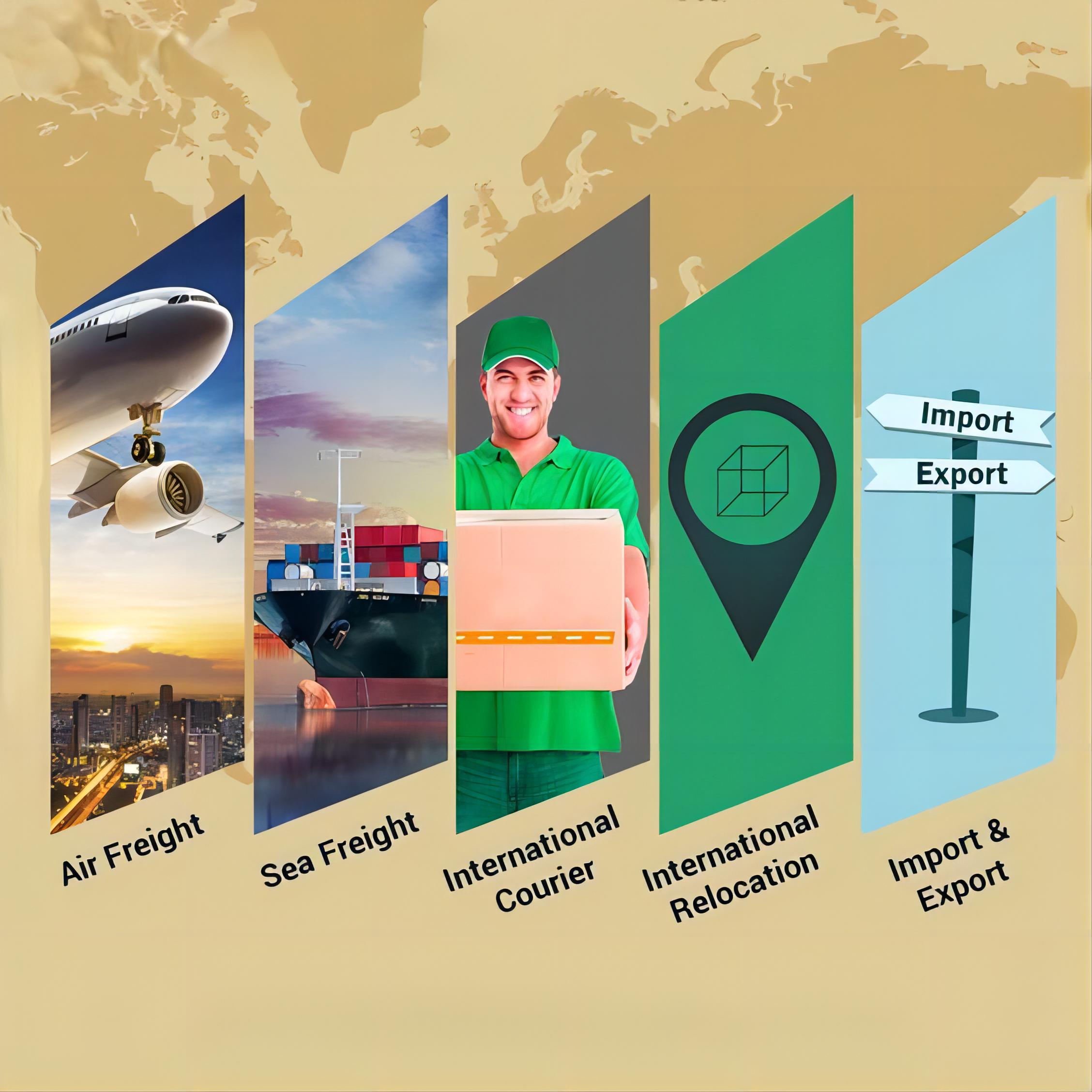
Trusted Door to Door Delivery from China to France
Navigating international logistics can be complex, particularly when seeking trusted door to door delivery from China to France. Businesses and individuals alike frequently face challenges ranging from intricate customs regulations to managing diverse transit times. This comprehensive guide aims to simplify the entire process, outlining efficient and reliable shipping solutions. Consequently, you can ensure your valuable goods arrive safely and precisely on schedule.
What is Trusted Door to Door Delivery from China to France?
Essentially, door to door delivery is a comprehensive shipping service that manages your cargo from its origin in China directly to its final destination in France. This service encompasses all stages of the logistics process. Therefore, it completely eliminates the need for you to coordinate multiple logistics providers.
Moreover, this integrated approach includes pickup from your supplier’s location, seamless international transportation, thorough customs clearance in both China and France, and finally, last-mile delivery to your specified address. This offers unparalleled convenience. Furthermore, it significantly reduces the administrative burden on importers.
Consequently, opting for a single, experienced provider like Top China Freight streamlines your entire supply chain management. This ensures a much smoother and more predictable delivery schedule. It also often results in better overall cost efficiency for your goods, making it an ideal logistics solution.
Key Benefits of Door-to-Door Service
Firstly, convenience stands out as a major advantage. You interact with just one point of contact for all inquiries and problem-solving, simplifying communication. This undoubtedly saves considerable time and effort for busy businesses.
Secondly, transparency in pricing is typically much higher. Many door-to-door services provide an all-inclusive quote upfront, covering all aspects of your shipment. Therefore, you can more effectively manage your shipping costs China to France without encountering hidden fees.
Thirdly, reduced risk is another critical benefit to consider. Professional freight forwarders adeptly manage all logistical aspects, including complex documentation and potential transit delays. This minimizes the chances of errors and ensures full compliance with import regulations France China.
Lastly, faster problem resolution is often observed with integrated services. Should any issues arise during transit or customs, the single provider is responsible for addressing them promptly. Indeed, this ensures a more efficient and less stressful import process.
How to Select the Best Shipping Method for Your China-France Route?
Selecting the optimal shipping method largely depends on your specific needs, including your budget, the urgency of the shipment, and the nature of your cargo. Various options offer distinct advantages and trade-offs. Hence, understanding these differences is crucial for making an informed decision.
Always consider your timeline and the characteristics of your goods before committing to a particular method. For instance, high-value or time-sensitive items might necessitate faster options. Conversely, bulkier, less urgent shipments generally benefit from more economical choices.
| Shipping Method | Cost Range (per kg/CBM) | Transit Time | Best For | Limitations |
|---|---|---|---|---|
| Air Freight | $5-10/kg | 5-10 days | Urgent/High-value/Small parcels | Highest cost, volume/weight restrictions |
| Sea Freight (FCL) | $2000-4500/container | 28-35 days | Large volumes/Heavy cargo/Non-urgent | Long transit, port-to-port focus |
| Sea Freight (LCL) | $80-150/CBM | 30-40 days | Smaller volumes (under 15CBM)/Cost-sensitive | Longer transit, potential delays due to consolidation |
| Rail Freight | $150-250/CBM | 18-25 days | Mid-range urgency/Cost-effective for heavy goods | Less flexible routes, not available to all locations |
| Express Service | $10-25/kg | 3-7 days | Samples/Documents/Urgent small parcels | Very high cost, strict weight/size limits |
Detailed Overview of Shipping Options
For urgent shipments or particularly high-value goods, air freight offers the fastest transit times available. While it represents the most expensive option, it is undeniably ideal for products with a short shelf life or time-critical delivery schedules. Many businesses rely on this for express delivery China to France needs.
Conversely, sea freight remains the most economical choice for larger volumes and heavier cargo. It is perfectly suitable when transit time is less critical and cost-effectiveness is paramount. Shipments can be either Full Container Load (FCL) or Less than Container Load (LCL), offering flexibility based on volume.
Furthermore, rail freight provides a balanced option, positioning itself between air and sea services. It offers significantly faster transit than sea freight at a considerably lower cost than air freight. This method is increasingly popular for its reliability and environmental benefits for shipping from China to Europe.
Lastly, for very small packages, samples, or crucial documents requiring rapid delivery, express courier services are invaluable. These specialized services focus on fast, tracked shipping directly to the recipient’s door. Consequently, they offer unparalleled speed for small parcel delivery China France requirements.
What are the Customs and Import Regulations for France from China?
Successfully clearing customs is an absolutely critical step in any international shipment journey. France, as an integral part of the European Union, adheres to strict import regulations and procedures. Therefore, accurate documentation and proper commodity classification are paramount to avoid delays.
Importers must typically provide a commercial invoice, a detailed packing list, a bill of lading (or air waybill), and often a certificate of origin. Furthermore, a clear understanding of applicable tariffs and duties is essential for accurately calculating total shipping costs.
Essential Documents for Customs Clearance
**Commercial Invoice:** This vital document provides comprehensive details about the goods, their declared value, and the terms of sale. It is absolutely crucial for customs valuation and the precise calculation of duties and taxes.
**Packing List:** The packing list meticulously details the contents of each individual package, including its dimensions and weight. This information significantly aids in efficient cargo handling and potential inspection processes.
**Bill of Lading/Air Waybill:** These serve as contracts between the shipper and carrier, simultaneously acting as a receipt for the goods and a document of title. They are undeniably vital for effective tracking door to door shipments.
**Certificate of Origin:** Sometimes required, this document officially verifies the country where the goods were manufactured or produced. It can importantly impact preferential duty rates under various trade agreements, offering potential savings.
**EORI Number:** All businesses actively involved in importing goods into the European Union are legally required to possess an Economic Operator Registration and Identification (EORI) number. This unique identifier is strictly necessary for all customs declarations.
Understanding Duties and Taxes
Import duties and Value Added Tax (VAT) are invariably levied on goods entering France from China. The specific duty rate depends entirely on the commodity code (HS Code) assigned to your product. Meanwhile, VAT is generally 20% in France, calculated on the customs value plus any applicable duties.
A professional customs brokerage service can expertly help navigate these inherent complexities. They ensure correct classification and precise calculation of all applicable charges. Consequently, this prevents unexpected customs delays and avoids additional, unforeseen costs.
Successful Door-to-Door Delivery Examples: China to France
To vividly illustrate the practical application of these diverse logistics solutions, let us consider a few real-world case studies. These examples effectively highlight various cargo types and strategic shipping approaches. Indeed, they showcase highly effective logistics solutions for China to France.
Case Study 1: E-commerce Apparel Shipment
This case involved an e-commerce brand importing its new seasonal apparel collection. The client needed a cost-effective solution that still offered complete door-to-door service. Utilizing LCL sea freight proved to be the ideal choice for this scenario.
| Key Detail | Description |
|---|---|
| Route | Shenzhen, China -> Paris, France |
| Cargo | Fashion Apparel (seasonal collection), 8 CBM, 1200 kg |
| Container | LCL (Less than Container Load) |
| Shipping Details | |
| – Carrier/Service | Major NVOCC with direct weekly service |
| – Port of Loading | Yantian, Shenzhen |
| – Port of Discharge | Le Havre |
| – Route Type | Direct |
| Cost Breakdown | |
| – Ocean Freight | $960 (LCL @ $120/CBM) |
| – Origin Charges (THC, documentation) | $180 |
| – Destination Charges | $250 |
| – Customs & Duties (estimated) | $450 (based on declared value) |
| – Total Landed Cost | $1840 |
| Timeline | |
| – Booking to Loading | 5 days |
| – Sea Transit | 30 days |
| – Customs Clearance | 3 days |
| – Total Door-to-Door | 38 days |
| Key Insight | Utilizing LCL for smaller, non-urgent e-commerce inventory proved highly cost-effective, balancing transit time with budget. The client benefited from streamlined customs and last-mile delivery, simplifying their supply chain. |
Case Study 2: Industrial Machinery Parts
A manufacturing company required specific industrial machine parts for a production line in France. Given the cargo’s weight and value, security and direct transit were paramount considerations. A Full Container Load (FCL) sea freight solution was implemented.
| Key Detail | Description |
|---|---|
| Route | Shanghai, China -> Lyon, France |
| Cargo | Industrial Machine Parts, 20 CBM, 5000 kg |
| Container | 20GP (Full Container Load) |
| Shipping Details | |
| – Carrier/Service | COSCO |
| – Port of Loading | Shanghai |
| – Port of Discharge | Fos-sur-Mer |
| – Route Type | Direct |
| Cost Breakdown | |
| – Ocean Freight | $2800 (20GP container) |
| – Origin Charges (THC, documentation) | $350 |
| – Destination Charges | $400 |
| – Customs & Duties (estimated) | $800 (low duty rate for machinery) |
| – Total Landed Cost | $4350 |
| Timeline | |
| – Booking to Loading | 7 days |
| – Sea Transit | 32 days |
| – Customs Clearance | 4 days |
| – Total Door-to-Door | 43 days |
| Key Insight | Opting for FCL provided enhanced security and efficiency for heavy, valuable machinery parts. Proactive customs documentation prevented delays, ensuring a smooth delivery to the factory without production interruptions. |
Case Study 3: Urgent Electronics Components
An electronics firm faced an urgent need for critical components to avoid production downtime. Speed was the absolute priority, even over cost considerations. Air freight offered the necessary rapid transit for this time-sensitive cargo.
| Key Detail | Description |
|---|---|
| Route | Guangzhou, China -> Toulouse, France |
| Cargo | Electronics Components, 0.5 CBM, 150 kg |
| Container | Air Freight Consolidation |
| Shipping Details | |
| – Carrier/Service | Lufthansa Cargo |
| – Port of Loading | Guangzhou (CAN) |
| – Port of Discharge | Toulouse (TLS) |
| – Route Type | Direct Air Cargo |
| Cost Breakdown | |
| – Air Freight | $1200 (consolidation rate) |
| – Origin Charges (handling, documentation) | $150 |
| – Destination Charges | $100 |
| – Customs & Duties (estimated) | $300 (high value, low volume) |
| – Total Landed Cost | $1750 |
| Timeline | |
| – Booking to Loading | 2 days |
| – Air Transit | 3 days |
| – Customs Clearance | 1 day |
| – Total Door-to-Door | 6 days |
| Key Insight | For time-sensitive electronics, air freight was the clear choice, significantly minimizing potential production downtime. The rapid transit successfully justified the higher cost, making it the most effective express delivery China to France solution. |
Cost-Saving Strategies for Door to Door Shipping China to France
Managing shipping costs effectively remains a paramount priority for any business engaged in international trade. Several strategic approaches can significantly help reduce expenses without compromising reliability or service quality. Indeed, a well-planned logistics approach can yield substantial financial savings.
Consolidate Shipments
Whenever logistically possible, consolidate multiple smaller orders or shipments into a single, larger consignment. This strategy can dramatically reduce per-unit shipping costs, especially for Less than Container Load (LCL) sea freight or consolidated air cargo. Many freight forwarders offer dedicated warehousing services in China specifically for this purpose.
Plan Ahead and Book Early
Booking your shipment well in advance can frequently secure more favorable freight rates and better capacity. Last-minute bookings, particularly during peak seasons like Q4, typically incur significantly higher charges. Therefore, early planning is absolutely key to effectively managing your delivery schedule and overall budget.
Market data suggests that freight rates typically increase by 15-25% during the August-October peak season for holiday goods. Consequently, planning around these predictable periods can lead to substantial savings. This proactive approach helps avoid premium charges and ensures smoother operations.
Consider Incoterms Carefully
It is crucial to fully understand and carefully choose appropriate Incoterms (International Commercial Terms) in agreement with your supplier. These internationally recognized terms precisely define responsibilities and costs between the buyer and seller. For instance, opting for FOB (Free On Board) allows you more direct control over the main freight leg, potentially reducing overall shipping costs.
Partner with an Experienced Freight Forwarder
An experienced freight forwarder can leverage their extensive network and deep industry expertise to identify the most competitive rates and efficient routes. They can also provide invaluable insights into current logistics trends and potential cost-saving opportunities. Look for a partner offering comprehensive logistics solutions China to France, ensuring peace of mind.
How Does Door to Door Delivery Compare to Other Shipping Options?
While door to door delivery undeniably offers immense convenience, it is essential to understand its position relative to other common shipping terms. Various methods exist, each providing different levels of service and responsibility. Therefore, comparing these options helps in making the most informed choice for your specific supply chain.
Typically, other options like port-to-port or airport-to-airport require the consignee to manage local pickup, customs clearance, and final delivery independently. This can be significantly more complex and time-consuming for the importer. Conversely, door to door services simplify the entire process, handling everything end-to-end.
| Service Level | Cost Implication | Effort Required by Importer | Best For |
|---|---|---|---|
| Door to Door | Highest upfront cost | Lowest | Maximum convenience, full logistics solution |
| Door to Port | Medium cost | Medium | Managing destination logistics, customs |
| Port to Port | Lowest upfront cost | Highest | Importers with own logistics teams |
| Port to Door | Medium cost | Medium | Importers handling origin logistics |
Alternative Strategies and Hybrid Solutions
For certain specific scenarios, alternative or hybrid logistics solutions might prove more suitable and economical. For example, if you possess your own extensive network for last-mile delivery within France, a ‘door to port’ service might be more cost-effective. This allows you greater control over the final transportation leg.
Consider a rail-sea combination for cargo that is both cost-sensitive and moderately urgent. Goods can travel by rail from China to a European port, then continue by sea to France. This innovative approach offers a robust balance between speed and cost, often reducing overall transit time compared to pure sea freight.
Another effective strategy involves utilizing air freight for urgent, critical components while simultaneously shipping bulkier, less time-sensitive parts of the same order via sea freight. This intelligent hybrid approach optimizes both delivery speed and overall shipping costs. This is particularly useful for complex supply chain management and ensuring operational continuity.
Which Option Should You Choose? A Decision Framework
**Budget Priority:** If minimizing overall shipping costs China to France is your absolute primary concern, then consider LCL sea freight or rail freight. These options should be paired with a reliable local transporter for the final leg. This approach often involves more coordination on your part but can yield significant savings.
**Speed Priority:** For truly urgent shipments or time-critical goods, air freight or specialized express services are simply indispensable, despite their inherently higher cost. The immense value of quick delivery often far outweighs the increased expense for time-sensitive products, preventing costly delays.
**Cargo Type Considerations:** Fragile, high-value, or specialized items often greatly benefit from direct, secure routes and specialized cargo handling, which comprehensive door-to-door services can expertly provide. Conversely, bulky, non-perishable goods are generally well-suited for full container load China to France via sea.
**Volume Thresholds:** For shipments under approximately 15 CBM, LCL at around $50-80/CBM may be considerably more economical than booking an entire full container. Conversely, if your cargo volume fills a 20GP or 40HQ, FCL offers significant cost per unit advantages. Therefore, accurately understanding your cargo volume is absolutely key to cost-effective planning.
Note: Freight rates are subject to dynamic changes based on fluctuating fuel costs, carrier capacity, and seasonal demand. Contact us for a current, accurate quote tailored to your specific shipment requirements and preferences.
Seamless Shipping with Trusted Door to Door Delivery from China to France
Successfully importing goods from China to France undeniably demands a strategic and well-executed approach to logistics. Choosing a <a href=”https://Top China Freight.com/”>trusted door to door delivery from China to France</a> service can dramatically simplify this inherently complex process. It provides unparalleled convenience, transparent pricing, and complete peace of mind for importers.
By diligently understanding the various available shipping methods, expertly navigating customs procedures, and implementing smart cost-saving strategies, you can significantly optimize your entire supply chain. Ultimately, partnering with an experienced and reliable freight forwarder ensures your goods arrive efficiently, reliably, and exactly as planned. This makes your international trade endeavors smoother and more successful.
Ready to streamline your logistics?
Ready to experience truly trusted door to door delivery from China to France? Our expert team at Top China Freight is here to provide seamless logistics solutions perfectly tailored to your unique business needs. Get in touch with us today for a personalized quote and effortlessly simplify your international shipping process.